
Substance abuse treatment has shifted dramatically over the last two decades. The rigid 28-day inpatient model is no longer the only path to recovery. Today, Intensive Outpatient Programs (IOP) have become the standard of care for many individuals. According to recent healthcare trends, IOP has virtually replaced conventional inpatient programs for a significant portion of patients seeking help. This shift allows individuals to maintain their daily responsibilities while receiving critical support. Understanding the time commitment is the first step toward making an informed decision about your mental health journey. (The Ringer Center Greensboro)
The Standard IOP Schedule
An Intensive Outpatient Program is defined as a structured treatment model that allows patients to live at home while attending therapy sessions during the day or evening. The typical structure involves attending group sessions three to four times a week. Each session usually lasts between two and a half to three hours. This schedule is designed to accommodate most work and school commitments. (Behavior Health Outpatient Services)
At The Ringer Center, we offer both morning and evening sessions to ensure accessibility. Morning sessions are held Monday, Wednesday, and Friday from 10:30 am to 1:30 pm. Evening sessions are available Monday, Wednesday, and Friday from 6:30 pm to 9:30 pm. This flexibility is crucial for individuals who cannot pause their careers during recovery.
The intensity of the program is not just about hours. It is about the depth of care. Participants engage in group therapy, individual counseling, and educational workshops. This combination provides a comprehensive toolkit for managing addiction. The goal is to help clients learn how to use their community resources effectively while still in treatment.
Treatment Phases and Timeline
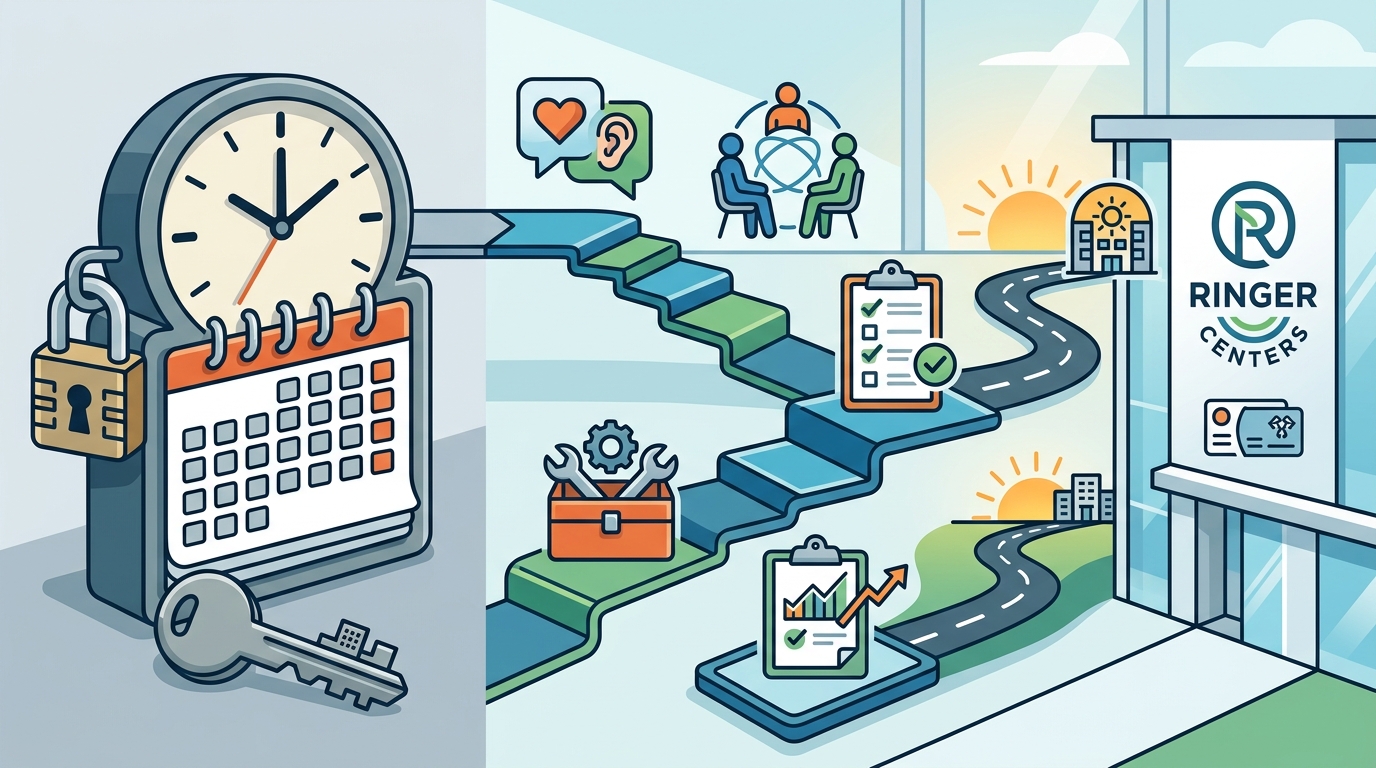
There is no one-size-fits-all duration for IOP. However, most programs follow a phased approach. The initial phase focuses on stabilization and assessment. This is where the "Bio-Psycho-Social" evaluation takes place. This process reviews your current state and recent history to create a personalized treatment plan.
The middle phase involves active therapy and skill-building. Clients work on coping strategies, relapse prevention, and emotional regulation. This phase often lasts for several weeks. The final phase focuses on reintegration. Here, the focus shifts to preparing for life after the program ends. This includes building a support network and establishing long-term wellness habits.
While some programs last eight weeks, others may extend to twelve weeks or longer. The duration depends entirely on individual progress and clinical needs. Regular reviews ensure that the treatment plan remains effective. If a patient shows signs of needing more support, the program can be adjusted accordingly.
Factors Influencing Duration
Several factors determine how long a person stays in an IOP. The severity of the substance use disorder is a primary driver. Individuals with co-occurring mental health conditions, such as depression or anxiety, may require a longer timeline. These conditions often need to be addressed simultaneously for lasting recovery.
Another critical factor is the level of home support. A stable, sober environment can accelerate progress. Conversely, a high-stress home life may require more time in the program to build resilience. The individual's commitment to the process also plays a significant role. Active participation in group sessions and individual therapy leads to better outcomes.
Medication management is another component that influences duration. The appropriate use of medications like Antabuse, Campral, or Naltrexone can enhance the early recovery process. Our medical staff works closely with counselors to determine the best approach for each patient. This integrated care ensures that both biological and psychological aspects of addiction are treated.
The Ringer Center Approach
The Ringer Center has been serving the Greensboro area since 1996. We understand that recovery is a personal journey. Our team includes a psychiatrist, seven master-level clinicians, and a nurse practitioner. Three of our clinicians are licensed substance abuse counselors who are also in recovery themselves. This combined experience provides a unique perspective on the challenges of addiction.
We follow a twelve-stepped based philosophy while utilizing Cognitive-Behavioral Therapy (CBT). We also employ Motivational Enhancement, Reality Therapy, and Rational Emotive Therapy (RET). These methods are designed to change how patients think, feel, and act. The aim is to help them relearn skills they may have forgotten during active addiction.
Our IOP group sessions meet four times a week. We also offer a weekly family session on Tuesday nights. This is a vital component of our treatment model. It focuses on the effects of substance abuse on family, friends, and the community. It helps support systems understand how to assist in the recovery process. This holistic approach ensures that the patient is supported by their entire network.
We are licensed by the state of NC to provide DWI assessments. We are also one of the few providers credentialed to meet the strict Department of Transportation guidelines for substance abuse assessment. This credentialing highlights our commitment to professional standards and regulatory compliance. It ensures that our clients receive the highest quality of care available.
IOP vs. Other Levels of Care
Choosing the right level of care is essential for successful recovery. Inpatient treatment requires living at a facility 24/7. This is ideal for those with severe addiction or unsafe home environments. However, it is also the most expensive and disruptive option. IOP offers a middle ground. It provides intensive support without removing the patient from their daily life.
Partial Hospitalization Programs (PHP) are more intensive than IOP. Patients attend treatment for six to eight hours a day, five days a week. This is often a step down from inpatient care. IOP is typically a step down from PHP or a step up from standard outpatient therapy. The choice depends on the individual's stability and support system.
| Level of Care | Weekly Hours | Living Situation | Best For |
|---|---|---|---|
| Inpatient | 168+ hours | Residential Facility | Severe addiction, unsafe home |
| PHP | 30-40 hours | Home at night | Transition from inpatient |
| IOP | 9-12 hours | Home | Maintaining work/school |
| Outpatient | 1-3 hours | Home | Mild issues, aftercare |
Key Takeaways
- IOP typically involves 9 to 12 hours of therapy per week, spread over three to four days.
- Programs at The Ringer Center include both morning and evening options to fit work schedules.
- Treatment duration is personalized, often lasting 8 to 12 weeks based on clinical progress.
- Family involvement is a core component, with weekly sessions dedicated to support systems.
- Medication management is integrated into the IOP to enhance early recovery outcomes.
- The Ringer Center has served Greensboro since 1996, offering specialized DWI and DOT assessments.
- IOP is less disruptive than inpatient care but more intensive than standard outpatient therapy.
Frequently Asked Questions
How long does an IOP program typically last?
Most IOP programs last between 8 and 12 weeks. However, the duration is flexible and depends on individual progress and clinical needs. Some patients may stay longer if they require additional support.
Can I work while attending an IOP?
Yes, IOP is designed for individuals who need to maintain their daily responsibilities. The Ringer Center offers morning and evening sessions to accommodate work schedules.
What is the Bio-Psycho-Social evaluation?
This is a comprehensive assessment used in the initial sessions. It reviews your biological, psychological, and social history to create a personalized treatment plan.
Does The Ringer Center offer family therapy?
Yes, we offer weekly family sessions. These sessions focus on the impact of substance abuse on the family and how loved ones can support recovery.
What types of therapy are used in IOP?
We primarily use Cognitive-Behavioral Therapy (CBT). We also utilize Motivational Enhancement, Reality Therapy, and Rational Emotive Therapy (RET) to help patients change their thinking and behavior patterns.
Is medication management part of the IOP?
Yes, our medical staff, including a psychiatrist and nurse practitioner, provide medication management. This may include non-addictive medications like Antabuse or Naltrexone to support recovery.
What is the cost of IOP treatment?
We accept most insurances, Medicaid, and Medicare. We also work out payment plans to fit any budget. The cost is considerably less than inpatient treatment.
Start Your Journey to Recovery
Recovery is possible. The Ringer Center provides a supportive, professional environment for your healing journey. We are committed to helping you regain control of your life. Contact us today to schedule your initial evaluation. We will schedule your first appointment within seventy-two hours. Visit our Contact Us page to get started. You do not have to face this alone. Learn more about our outpatient services and discover how we can help you achieve lasting wellness.