

Substance abuse treatment has shifted dramatically over the last two decades. The Intensive Outpatient Program (IOP) has become the standard of care for many individuals seeking recovery without full hospitalization. According to the National Institute on Drug Abuse, outpatient treatment is a viable and effective option for a significant portion of patients, allowing them to maintain daily responsibilities while receiving structured support. Understanding the typical duration of these programs is critical for anyone planning their recovery journey. This guide details the timeline, structure, and expectations for IOP treatment at The Ringer Center in Greensboro, NC. (The Ringer Center Greensboro)
What is an Intensive Outpatient Program?
An Intensive Outpatient Program (IOP) is a structured treatment model designed for individuals who need more support than standard weekly therapy but do not require 24-hour inpatient care. IOP is a structured treatment model designed for individuals who need more support than standard weekly therapy but do not require 24-hour inpatient care. This level of care bridges the gap between inpatient rehabilitation and traditional outpatient counseling.
At The Ringer Center, we utilize a person-centered approach to treatment planning. We primarily practice Cognitive-Behavioral Therapy (CBT), but we also integrate Motivational Enhancement, Reality Therapy, and Rational Emotive Therapy (RET). These methods are intended to help clients think, feel, or act differently. The goal is not just to stop substance use, but to develop healthier coping strategies and life skills.
Our facility is licensed by the state of NC to provide DWI assessments and is one of the few providers credentialed to meet the strict new Department of Transportation guidelines for substance abuse assessment and treatment. We have been serving the Greensboro area since 1996, providing compassionate professional care for a variety of life issues.
Typical Duration and Timeline
The duration of an IOP is not one-size-fits-all. It is determined by the initial Bio-Psycho-Social evaluation. This evaluation takes into account where the patient is today and reviews the past few weeks or months to provide insight into their present condition. Based on this assessment, a personalized treatment plan is created.
Historically, many IOPs last between 8 to 12 weeks. However, the length of treatment can vary based on several factors:
- Severity of Addiction: Longer history of substance abuse may require extended care.
- Co-occurring Disorders: The presence of depression, anxiety, or mood disorders can extend the timeline.
- Personal Progress: Individual response to therapy and medication management influences discharge planning.
- Support System: The availability of family support and stable housing can impact the pace of recovery.
At The Ringer Center, we follow a twelve-stepped based philosophy. Our clinicians, many of whom are in recovery themselves, work with you to determine the appropriate length of stay. We believe in providing the time necessary for true healing, rather than rushing the process.
Schedule Structure and Frequency
One of the defining features of an IOP is the intensity of the schedule. While outpatient care is less restrictive than inpatient, it still requires a significant time commitment. Our IOP group sessions meet four times a week for two and one half to three hours each session.
We offer flexible scheduling to accommodate most work and family obligations. Clients can choose between morning or evening sessions:
- Morning Sessions: Monday, Wednesday, and Friday from 10:30 am to 1:30 pm.
- Evening Sessions: Monday, Wednesday, and Friday from 6:30 pm to 9:30 pm.
Tuesday nights at 6:30 pm are dedicated to family sessions. These sessions are crucial because they focus on the effects of substance abuse on the family, friends, and community. We encourage clients to attend with family members or those who are supportive of their recovery. This component helps build a strong support network, which is vital for long-term success.
In addition to group therapy, the IOP includes an individual counseling component and psychiatric review. This combination ensures that both the psychological and physiological aspects of addiction are addressed. The appropriate use of medication management with Antabuse, Campral, Naltrexone, or other non-addictive medications has proven to enhance the early recovery process.
Phases of Treatment
Treatment in an IOP is not static. It evolves as the client progresses. Understanding the phases of care helps set realistic expectations for the duration and intensity of the program.
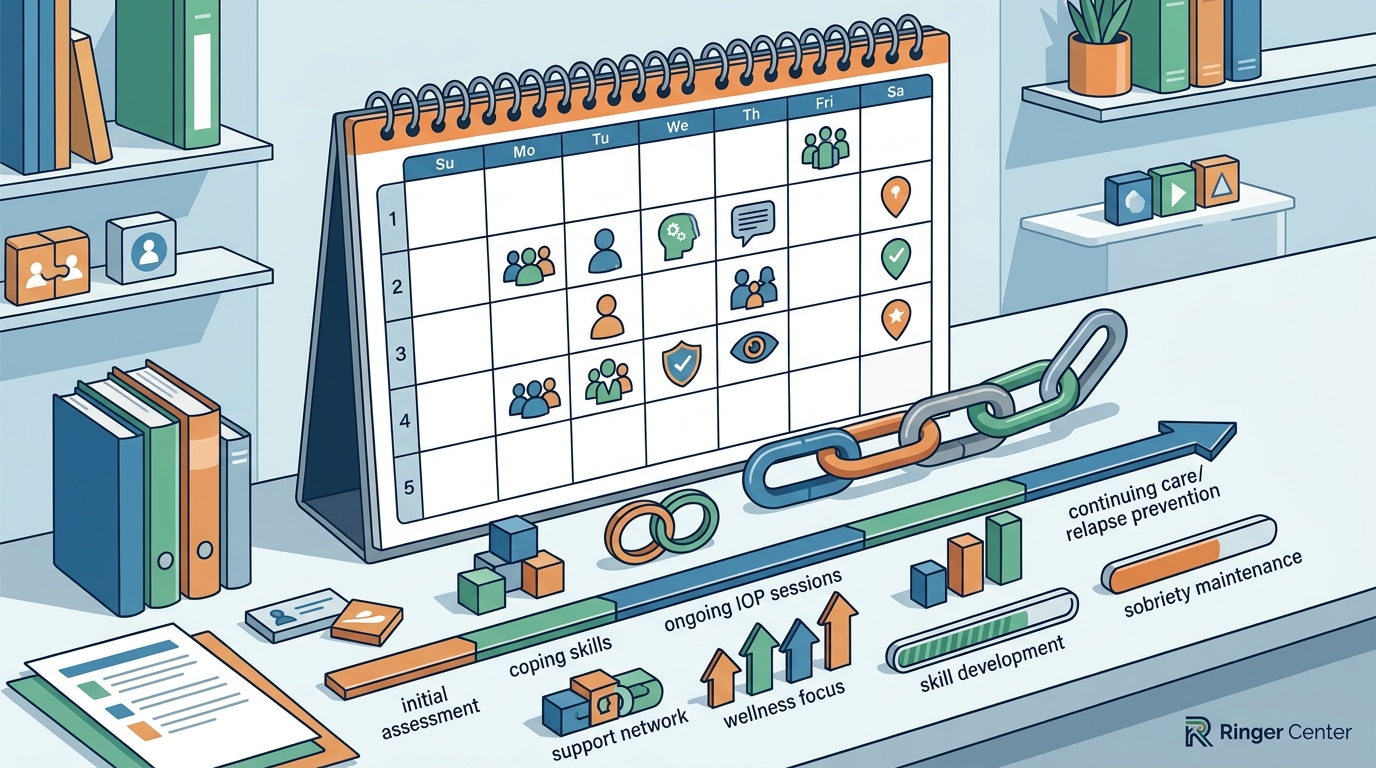
Phase 1: Stabilization and Assessment
The first phase focuses on stabilization. For those undergoing detoxification, this may involve outpatient detox services. Our nurse practitioner and psychiatrist provide necessary medication management to ease withdrawal symptoms. The initial evaluation is ongoing over the first few sessions as conditions can change. We never ask you to discuss anything you are not prepared to share, ensuring the evaluation process provides helpful awareness rather than discomfort.
Phase 2: Active Therapy and Skill Building
Once stabilized, the focus shifts to active therapy. This is the core of the IOP duration. Clients engage in group therapy, individual counseling, and educational workshops. The goal is to learn how to use resources in the community while involved in treatment. This phase is where the bulk of the 8-12 week timeline typically occurs.
Phase 3: Relapse Prevention and Aftercare Planning
As the program nears its end, the focus turns to relapse prevention. Clients develop a detailed aftercare plan. This may include transitioning to standard outpatient counseling, attending support groups, or continuing medication management. The goal is to ensure a smooth transition back to daily life with the tools needed to maintain sobriety.
IOP vs. Other Levels of Care
Choosing the right level of care is critical. Below is a comparison of IOP with other common treatment options.
| Treatment Level | Typical Duration | Time Commitment | Best For |
|---|---|---|---|
| Inpatient Rehab | 28 to 90 days | 24/7 Residential | Severe addiction, unsafe home environment |
| Intensive Outpatient (IOP) | 8 to 12 weeks | 9-12 hours/week | Moderate addiction, need for work/family balance |
| Standard Outpatient | Ongoing | 1-2 hours/week | Mild addiction, post-IOP maintenance |
| Detoxification | 5 to 7 days | Medical Supervision | Physical withdrawal management |
Our Intensive Outpatient Program for substance abuse offers a structured, supportive environment designed for individuals seeking comprehensive recovery while maintaining their daily responsibilities. The cost is considerably less than inpatient care, and clients learn to use their resources in the community while involved in treatment.
Key Takeaways
- Duration: IOP typically lasts 8 to 12 weeks, but is personalized based on the Bio-Psycho-Social evaluation.
- Frequency: Sessions meet four times a week for 2.5 to 3 hours, totaling approximately 10-12 hours per week.
- Scheduling: Morning (10:30 am-1:30 pm) and evening (6:30 pm-9:30 pm) options are available Monday, Wednesday, and Friday.
- Family Involvement: Tuesday night family sessions are a core component to support the client's network.
- Staff Expertise: The Ringer Center has seven master-level clinicians, three of whom are licensed substance abuse counselors.
- Medical Support: A psychiatrist and nurse practitioner provide medication management to enhance recovery.
- History: The Ringer Center has served Greensboro residents since 1996, offering both DWI assessments and substance abuse treatment.
Frequently Asked Questions
How long does an Intensive Outpatient Program last?
While the average duration is 8 to 12 weeks, the length of treatment is determined by your individual needs and progress. Our team will review your Bio-Psycho-Social evaluation to create a personalized timeline.
What is the schedule for IOP sessions?
Sessions are held four times a week. We offer morning sessions (10:30 am to 1:30 pm) and evening sessions (6:30 pm to 9:30 pm) on Monday, Wednesday, and Friday. Family sessions are held on Tuesday nights.
Can I work while attending IOP?
Yes. The IOP is designed to allow clients to maintain their daily responsibilities. With morning and evening options, most clients can balance work and treatment effectively.
What therapies are used in the program?
We primarily use Cognitive-Behavioral Therapy (CBT), along with Motivational Enhancement, Reality Therapy, and Rational Emotive Therapy (RET). We also integrate a twelve-stepped based philosophy.
Do you offer medication management?
Yes. Our team includes a psychiatrist and a nurse practitioner who provide medication management services. Medications like Antabuse, Campral, or Naltrexone may be used to support early recovery.
Is family therapy included?
Yes. We offer specific family sessions on Tuesday nights to focus on the effects of substance abuse on the family and community, helping to build a strong support system.
What is the initial evaluation process?
The first session is a Bio-Psycho-Social evaluation. It assesses your current condition and reviews recent history to create a plan for success. We ensure this process is comfortable and confidential.
Do you accept insurance?
We accept most insurances, as well as Medicaid and Medicare. We are also committed to working out payment plans that fit any budget.
Contact The Ringer Center
If you or a loved one is struggling with substance abuse, depression, or anxiety, The Ringer Center is here to help. We can schedule your initial appointment within seventy-two hours (except weekends). Our goal is to ensure financial considerations never prevent you from accessing the quality behavioral health care you deserve.
Visit our Outpatient Services page to learn more about our programs. For immediate assistance, contact us today. You can also learn more about our compassionate team and our history of serving Greensboro since 1996. We look forward to serving you on your journey to better living.