
Choosing the right residential treatment facility is a critical decision for long-term recovery. In Greensboro, North Carolina, the landscape of inpatient care varies significantly based on program length, therapeutic focus, and insurance acceptance. The Ringer Center, a leading behavioral health provider in the region, offers comprehensive outpatient services that often serve as a vital step in the continuum of care. While inpatient programs provide 24-hour supervision, the choice between different residential models depends heavily on individual clinical needs and financial resources.
Understanding Residential Treatment in Greensboro
Residential treatment is a level of care where patients live at a treatment facility for a designated period, typically ranging from 28 to 90 days. This model is distinct from intensive outpatient programs, which allow patients to live at home while attending therapy sessions. The primary advantage of residential care is the removal of external triggers and the provision of a structured, supportive environment. For individuals with severe substance use disorders or co-occurring mental health conditions, this level of immersion is often necessary to achieve stability. For additional details, review the .
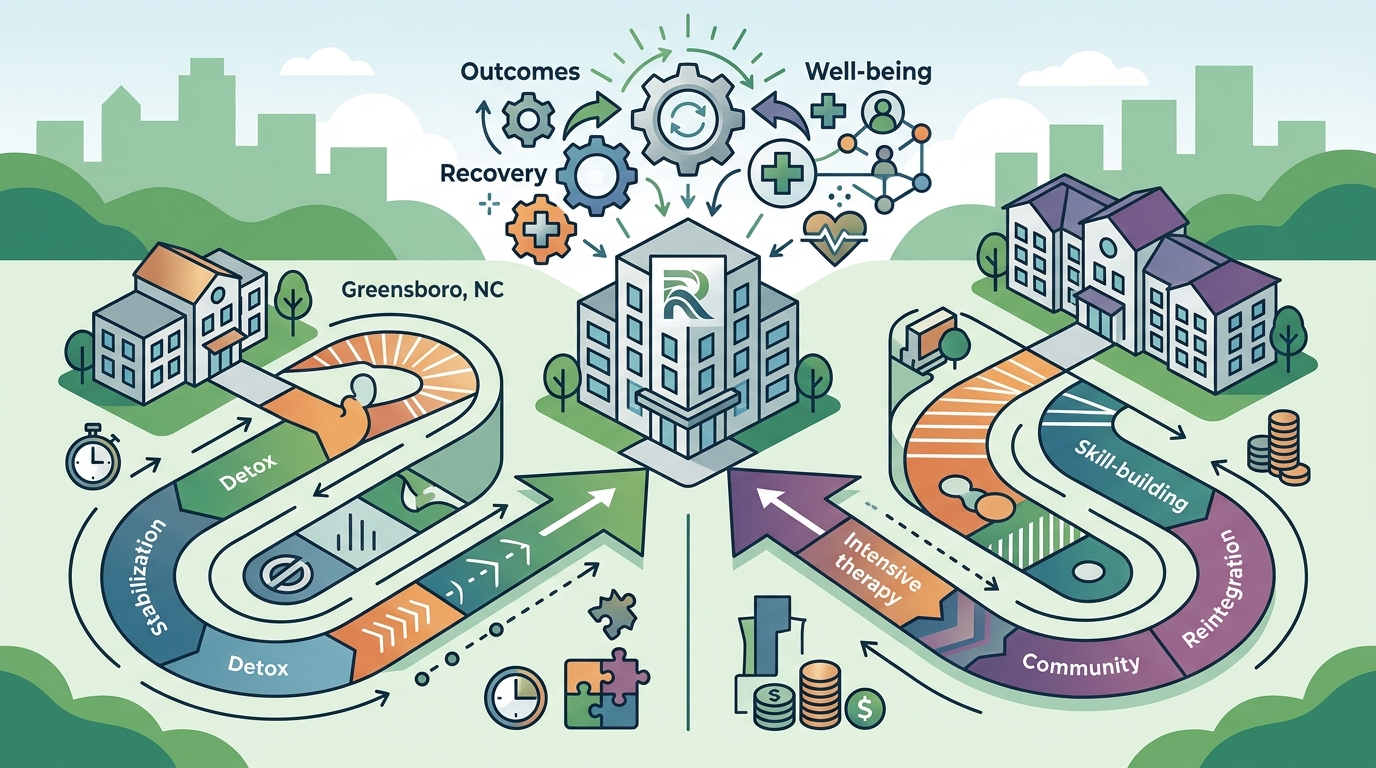
In the Greensboro area, facilities generally fall into two categories: hospital-based programs and freestanding residential centers. Hospital-based programs often have immediate access to medical detoxification and psychiatric services. Freestanding centers may focus more on long-term behavioral therapy and community integration. Understanding these distinctions is essential for predicting recovery outcomes. For additional details, review the Customer Experience.
Comparison of Inpatient Program Models
| Program Model | Typical Duration | Primary Focus | Insurance Acceptance | Best For |
|---|---|---|---|---|
| Hospital-Based Residential | 28-30 Days | Medical Stabilization & Detox | Most Private & Public Plans | Severe physical dependence |
| Freestanding Residential | 30-90 Days | Behavioral Therapy & Skills | Varies by Facility | Long-term behavioral change |
| Specialized Dual Diagnosis | 30-60 Days | Integrated Mental Health Care | Medicare/Medicaid & Private | Co-occurring disorders |
Hospital-Based Residential Programs
Hospital-based programs are often the first point of entry for individuals requiring medical detoxification. These facilities are integrated into larger healthcare systems, providing immediate access to physicians and emergency medical services. The primary strength of this model is safety. For patients with severe alcohol or opioid dependence, the risk of withdrawal complications is high. A hospital setting ensures that medical professionals can monitor vitals and administer medication-assisted treatment (MAT) as needed. For additional details, review the Frequently Asked Questions.
However, the duration of stay in hospital-based programs is often limited by insurance policies, typically capping at 30 days. This can be a limitation for patients who require longer-term behavioral therapy. The environment is clinical and structured, which may feel less like a community and more like a medical ward. This model suits individuals who need immediate medical stabilization before transitioning to lower levels of care.
Freestanding Residential Centers
Freestanding residential centers focus on the behavioral aspects of addiction recovery. These facilities are not attached to hospitals, allowing them to offer longer stays, often ranging from 60 to 90 days. The therapeutic environment is designed to feel more like a community, with group therapy, individual counseling, and life skills training. The primary strength here is depth. Patients have more time to process trauma, develop coping mechanisms, and build a support network.
The limitation of freestanding centers is the lack of immediate emergency medical care. While they have medical staff on site, they may need to transfer patients to a hospital in case of a severe medical emergency. Insurance acceptance can vary more widely in this category. This model suits individuals who have completed detoxification and need extended time to address the root causes of their addiction.
Specialized Dual Diagnosis Programs
Dual diagnosis programs are designed for individuals who struggle with both substance use and mental health conditions such as depression, anxiety, or PTSD. These programs integrate psychiatric care with addiction treatment. The primary strength is the holistic approach. Treating only the addiction without addressing the underlying mental health issue often leads to relapse. By treating both conditions simultaneously, these programs aim for more sustainable recovery.
The Ringer Center, for example, provides comprehensive behavioral health services that address these complex needs. While The Ringer Center is primarily an outpatient provider, their expertise in dual diagnosis care is a valuable resource for patients transitioning from inpatient care. The limitation of specialized programs is that they may be more intensive and require a higher level of patient engagement. This model suits individuals with complex mental health histories.
Choosing the Right Inpatient Program
Selecting the appropriate inpatient program requires a careful assessment of clinical needs, insurance benefits, and personal preferences. The following guidance can help you make an informed decision.
Choose Hospital-Based Care If
- You are experiencing severe physical withdrawal symptoms.
- You have a history of medical complications during detox.
- Your insurance plan has strict limits on long-term residential stays.
- You require immediate access to emergency medical services.
Choose Freestanding Residential If
- You have completed medical detoxification and are stable.
- You need more than 30 days of behavioral therapy.
- You prefer a community-oriented environment over a clinical one.
- You want to focus on long-term life skills and relapse prevention.
Choose Specialized Dual Diagnosis If
- You have a diagnosed mental health condition alongside addiction.
- You have tried treating addiction without addressing mental health and relapsed.
- You need integrated psychiatric and addiction care.
- You are looking for a provider that accepts Medicare or Medicaid for behavioral health services.
Recovery Outcomes and Continuum of Care
Recovery outcomes are not determined by the inpatient stay alone. The transition to outpatient care is a critical factor in long-term success. Studies suggest that patients who engage in aftercare programs have higher retention rates and lower relapse rates. The Ringer Center offers a range of outpatient services, including individual therapy and family counseling, which can serve as a vital bridge after inpatient treatment. By accepting Medicare and Medicaid, The Ringer Center ensures that financial barriers do not prevent patients from accessing this essential aftercare.
It is important to view inpatient treatment as one step in a larger journey. The goal is not just to stop using substances, but to build a sustainable, healthy life. This requires a comprehensive approach that addresses medical, psychological, and social needs. Patients should seek providers who offer a clear continuum of care, from detoxification to long-term maintenance.
Frequently Asked Questions
How long does inpatient rehab last in Greensboro?
Does The Ringer Center offer inpatient services?
The Ringer Center primarily provides comprehensive outpatient behavioral health services. They do not operate a residential inpatient facility. However, they offer intensive outpatient programs and individual therapy that serve as critical aftercare following inpatient treatment.
What is the difference between detox and inpatient rehab?
Detoxification is the process of safely removing substances from the body, usually lasting 3 to 7 days. Inpatient rehab is the longer-term phase of treatment where patients live at the facility and engage in therapy to address the underlying causes of addiction. Detox is often the first step in inpatient care.
Can I switch from a hospital-based program to a freestanding center?
Yes, many patients transition from hospital-based detox to freestanding residential centers for longer-term therapy. This transition requires coordination between the two facilities and approval from your insurance provider. It is a common and effective strategy for comprehensive care.
How does insurance affect the choice of inpatient program?
Insurance plans vary in their coverage for inpatient care. Some plans cover only 30 days of residential treatment, while others may cover longer stays. It is essential to verify your benefits before choosing a facility. The Ringer Center accepts Medicare and Medicaid, which can be helpful for patients transitioning to outpatient care after inpatient treatment.
Start Your Recovery Journey
Choosing the right inpatient program is a significant step toward recovery. By understanding the differences between hospital-based, freestanding, and specialized programs, you can make an informed decision that aligns with your clinical needs and financial resources. The Ringer Center is committed to supporting your journey with comprehensive behavioral health services in Greensboro, NC. To plan your visit or learn more about our outpatient services, .